
Turkish Foods: 19 Must-Try Dishes & Essential Vocabulary
451 views
You finally sit down in a Turkish restaurant, open the menu, and hit a wall.
Kebap, börek, dolma, mantı, pide, meze.
You may recognize a few names, but that doesn't tell you what you'll actually receive—or how to pronounce it when the waiter arrives. Ordering “the Turkish pizza thing” works in a pinch. Learning a handful of food words is much better.
For language learners, Turkish food offers a surprisingly practical route into everyday vocabulary. Restaurant menus repeat the same suffixes, ingredient names, cooking methods, and grammatical patterns. Learn patlıcan once, for example, and suddenly patlıcan kebabı stops looking like a random string of letters: it means eggplant kebab.
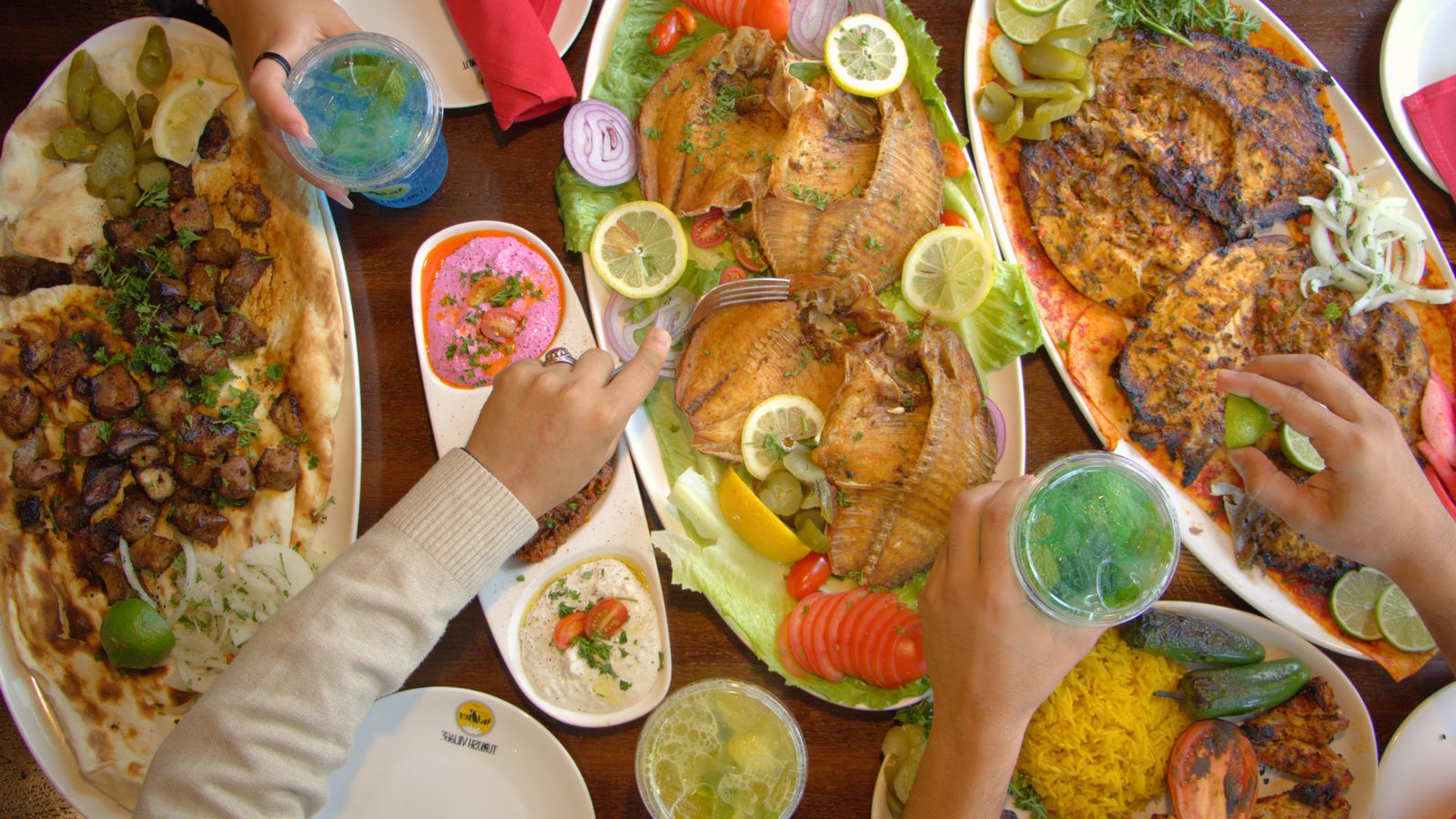
Turkish cuisine is also much broader than the familiar döner-and-baklava combination. Official Turkish cultural sources describe a food tradition shaped by Anatolian agriculture, regional ingredients, and centuries of interaction across Seljuk and Ottoman history. Soups, olive-oil dishes, pastries, stuffed vegetables, grain dishes, grilled meats, and desserts all belong to the picture.
So bring your appetite. And maybe keep your pronunciation anxiety under control.
First, a tiny Turkish food vocabulary cheat sheet
A few words appear everywhere:
Turkish | Meaning | Useful note |
|---|---|---|
yemek | food / meal / dish | Also appears in yemek yemek — “to eat” |
kahvaltı | breakfast | Literally associated with eating before coffee |
çorba | soup | Common starter |
et | meat | You'll see it constantly |
tavuk | chicken | Easy restaurant vocabulary |
balık | fish | Especially useful near coastal areas |
sebze | vegetable | |
peynir | cheese | A breakfast staple |
ekmek | bread | |
tatlı | sweet / dessert | Context decides |
acı | spicy / hot | Ask before assuming |
az acılı | mildly spicy | Very useful phrase |
vejetaryen | vegetarian | Similar to English |
hesap | bill/check | Hesap lütfen = “The bill, please” |
One pronunciation detail saves a lot of awkward guessing: Turkish c sounds like the English j, while ç sounds like ch. Meanwhile, ş sounds like sh.
So çorba begins with “chor,” and şiş sounds roughly like “sheesh.”
Not so mysterious anymore.
1. Kebap: much more than one dish
Kebap doesn't mean one specific recipe.
The word covers a wide family of dishes, with famous regional styles including spicy Adana kebap, milder Urfa kebap, skewered şiş kebap, and İskender kebap from Bursa. GoTürkiye notes that the latter traces back to İskender Efendi and dates to 1867; it combines thinly sliced meat with bread, tomato sauce, yogurt, and butter.
Useful words:
et — meat
şiş — skewer
kıyma — minced meat
Don't assume every kebap is a giant vertical rotisserie. That's döner.
2. Döner: the spinning classic
The clue is right in the name: dönmek means “to turn,” and döner refers to meat cooked on a rotating vertical spit.
It may arrive in bread, a wrap, or plated with rice and accompaniments. Chicken versions are tavuk döner; meat versions may simply be listed as et döner.
One tiny menu lesson, right there.
3. Lahmacun: thin, crisp, and not quite pizza
Calling lahmacun “Turkish pizza” helps beginners visualize it, but the comparison falls apart pretty quickly.
It's a thin flatbread topped with a seasoned mixture that commonly includes minced meat, vegetables, and herbs. The official tourism guidance lists it among popular Turkish foods and distinguishes it from thicker breads such as pide.
You'll often see people add parsley, squeeze lemon over it, and roll it up.
4. Pide: the boat-shaped answer to hunger
Pide is a baked flatbread with an elongated, boat-like shape and toppings such as cheese, meat, or vegetables.
Common menu combinations include:
kıymalı pide — minced-meat pide
peynirli pide — cheese pide
kuşbaşılı pide — diced-meat pide
That -lı/-li ending is worth noticing. It often conveys the idea of “with” or “containing.”
Food vocabulary and grammar overlap constantly.
5. Mantı: tiny dumplings, serious flavor
Mantı are Turkish dumplings, often filled with seasoned meat and served with yogurt, butter, spices, or sauce.
The frustrating part? There isn't one universal size or style. Regional traditions vary. Some mantı are remarkably small, which makes the preparation feel slightly unreasonable until you taste them.
Then you understand.
6. Börek: flaky pastry with endless possibilities
Börek is a family of pastries made with thin dough, often filled with cheese, spinach, potatoes, or meat.
Learn these fillings:
peynirli means with cheese.
ıspanaklı means with spinach.
kıymalı means with minced meat.
One word changes. The entire order changes.
7. Simit: the snack you'll spot everywhere
A simit is a circular bread covered with sesame seeds, commonly eaten for breakfast or as a quick snack.
GoTürkiye traces the snack's history back centuries and describes it as a familiar part of Turkish food culture.
Try it with:
çay — tea
peynir — cheese
zeytin — olives
Simple. Excellent.
8. Menemen: breakfast gets messy
Menemen is an egg dish usually prepared with tomatoes, green peppers, and seasoning. Some versions include additional ingredients.
And yes, discussions about whether onions belong in menemen can become strangely intense.
Don't step into that argument unless you're ready.
9. Meze: don't confuse it with one appetizer
Meze is a category rather than a single dish: a selection of small plates that may include yogurt dishes, vegetable preparations, seafood, olives, salads, and dips.
Useful examples include haydari, a thick yogurt-based preparation, and cacık, a lighter yogurt dish commonly associated with cucumber and herbs.
If someone asks what kind of meze you want, “meze” alone isn't the complete answer.
Menus can be deceptively specific.
10. Dolma and sarma: stuffed or wrapped?
These two words are worth learning because they reveal how Turkish names food.
Dolma comes from the idea of filling or stuffing and commonly refers to stuffed vegetables. Sarma comes from wrapping and is frequently used for fillings rolled inside leaves or other wrappers.
The distinction is reflected in Turkish tourism descriptions of stuffed vegetables and grape leaves.
A useful example:
yaprak sarma — stuffed grape leaves
Yaprak means “leaf.”
11. Köfte: don't just translate it as meatball
Köfte is often translated as “meatball,” which is close enough for a menu but incomplete as a cultural explanation.
Turkish köfte comes in many regional styles, shapes, seasonings, and cooking methods. Turkey's culinary atlas and regional food records list a striking number of variations.
Order first. Generalize later.
12. Mercimek çorbası: the comforting essential
Mercimek means lentil, while çorba means soup.
So:
mercimek çorbası = lentil soup
This is one of the easiest dishes for Turkish learners because the vocabulary is transparent once you know the words.
13. Kuru fasulye: humble, filling, unforgettable
Kuru fasulye literally refers to dried beans, and the resulting dish is a hearty bean preparation frequently served with rice.
Nothing glamorous here.
That's part of its appeal.
Pair it with pilav, meaning a rice or grain dish, and you've learned another word that will keep appearing on menus.
14. İmam bayıldı: eggplant with a memorable name
The name imam bayıldı literally translates roughly as “the imam fainted.”
The story behind the name has several versions, but the dish itself is an eggplant preparation associated with vegetables and olive oil rather than the heavy grilled-meat stereotype many visitors expect from Turkish food.
Patlıcan means eggplant. Learn it. You'll need it.
15. Gözleme: simple-looking, dangerously easy to overeat
Gözleme is a thin stuffed flatbread or pastry cooked on a griddle, often containing cheese, potato, spinach, or meat.
It's one of those foods that looks modest.
Then you order a second one.
16. Ayran: salty yogurt, surprisingly refreshing
Ayran is made from yogurt, water, and salt. Turkish tourism sources describe it as a classic accompaniment to meals and grilled dishes.
If you're expecting a sweet yogurt drink, the first sip may be confusing.
Give it a second.
17. Baklava: layers, nuts, syrup
Everyone knows the name. Fewer people realize how much regional variation exists.
Baklava typically consists of thin layers of pastry, nuts, fat, and syrup. Türkiye's Ministry of Culture and Tourism provides traditional recipe specifications that, in one example, include 500 grams of flour, 220 grams of pistachios, and 250 grams of butter or margarine for a 12-serving preparation.
That's not a casual dessert.
And it isn't supposed to be.
18. Lokum: Turkish delight beyond the souvenir box
Lokum is a confection traditionally made with starch and sugar and flavored in different ways, including rose and citrus notes. Pistachio varieties are also common.
The Turkish word you'll want is lokum.
“Turkish delight” is useful in English. It won't help much when you're reading a Turkish shop label.
19. Sütlaç: finish with something softer
Not every Turkish dessert involves pastry and syrup.
Sütlaç is a rice pudding-style milk dessert. It belongs to a broader category of Turkish milk-based sweets that includes dishes such as kazandibi and muhallebi.
Useful breakdown:
süt — milk
tatlı — dessert/sweet
Your vocabulary is expanding while dessert is happening. Efficient.
How to actually use this vocabulary at a restaurant
You don't need perfect Turkish.
Start with these practical phrases:
Bu ne? — What is this?
Acı mı? — Is it spicy?
Acısız, lütfen. — Not spicy, please.
Az acılı. — Mildly spicy.
Bunda ne var? — What's in this?
Vejetaryen bir şey var mı? — Is there anything vegetarian?
Hesap, lütfen. — The bill, please.
A small warning: Turkish ı is not the same as English “i.” It represents a distinct vowel sound. Beginners often ignore that distinction because keyboards make it annoying to type.
Speaking, though, is another matter.
The more you listen, the easier the contrast becomes.
FAQ: Turkish food questions language learners actually ask
What is the most famous Turkish food?
Döner and kebap are internationally recognized, but Turkish cuisine includes far more: soups, stuffed vegetables, pastries, grain dishes, meze, regional specialties, and desserts.
What should a beginner try first?
Start with pide, mantı, mercimek çorbası, börek, köfte, simit, and baklava. They provide a useful cross-section without forcing you into the most adventurous menu choices on day one.
Is Turkish food always spicy?
No. Acı means spicy, and many dishes aren't especially hot. If you prefer less heat, say az acılı for mildly spicy or acısız for no spice.
What's the difference between dolma and sarma?
Generally, dolma refers to something stuffed, while sarma refers to something wrapped or rolled. The specific ingredients vary by region and recipe.
What does “-li” mean on Turkish food menus?
Endings such as -lı, -li, -lu, and -lü often indicate that something contains or is made with an ingredient. Peynirli, for example, means “with cheese.”
Learn the food, then listen for the language
The fastest way to turn this vocabulary into something you can actually use is to stop memorizing isolated translations.
Next time you encounter mercimek çorbası, don't translate each word mechanically. Notice the pattern. Spot peynirli on a menu and predict the ingredient before checking. Hear acı mı? and recognize the question instantly.
Then try ordering.
A menu is a language lesson hiding in plain sight—and Turkish food gives you plenty of reasons to keep reading.
Turkish foods
Turkish cuisine
must-try Turkish dishes
Turkish food vocabulary
learn Turkish
Turkish language
Turkish dishes
Turkish food words
Found this helpful? Share it!